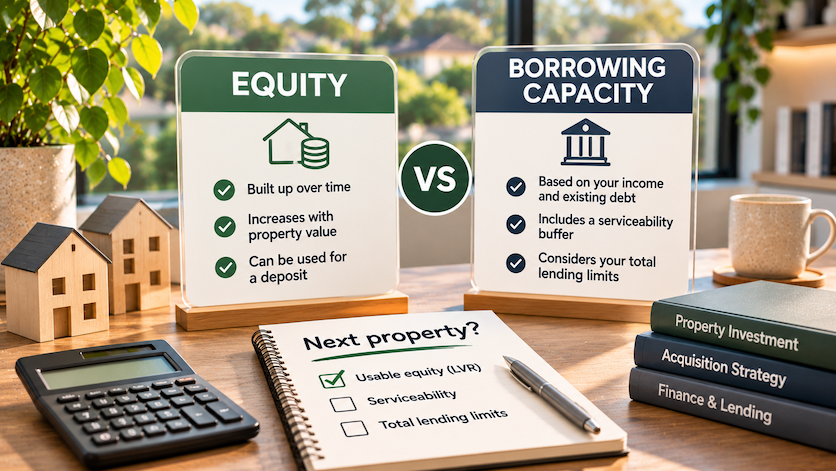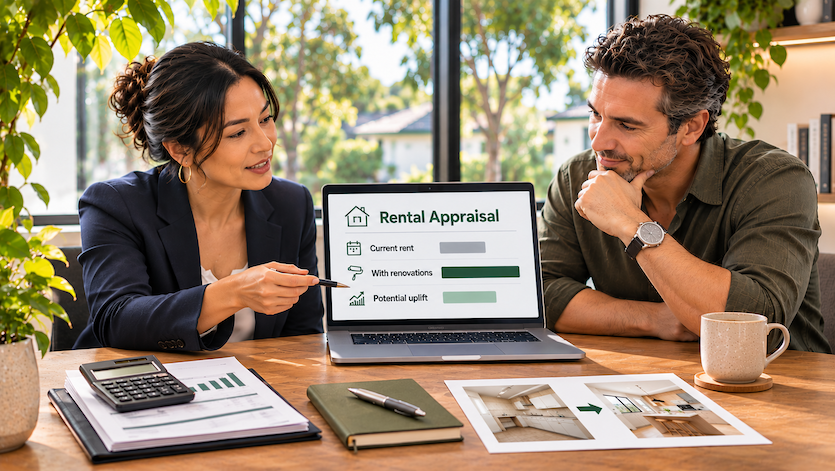
You've spent years building savings and equity for your next investment property. You've also decided to work with a buyer's agent who can help research locations, assess opportunities and negotiate the purchase. Then you receive their fee proposal and realise the cost will come out of money you'd set aside for the deposit and settlement.
It's a common budgeting challenge for investors using professional help to buy another property. Your deposit is only part of the cash you'll need. Transfer duty, legal fees, inspections and other acquisition costs can add up, and a buyer's agent fee may be due before you've purchased anything.
You may be able to pay a buyer's agent without drawing down your planned property deposit by negotiating the payment schedule, using savings allocated to other purposes or accessing capital from an existing investment property. Each option has different costs and implications for your next mortgage. The best approach starts with understanding exactly when the fee is due and how much cash your purchase needs.
How do buyer's agent fees work in Australia?
A buyer's agent, sometimes called a buyer's advocate, works on behalf of a purchaser. Depending on the service, they may help select investment locations, identify suitable properties, assess the numbers, negotiate with selling agents or bid at auction. The fee pays for the services outlined in the agreement you sign with them.
Some buyer's agents charge a fixed amount, while others charge a percentage of the final purchase price. An agreement might require an initial engagement payment followed by a larger amount when a suitable property is secured. Other agreements have different milestones, so the timing and conditions matter as much as the total fee.
Fees are not set at a single rate across Australia. The NSW Government's guidance on buyer's agents explains that fixed fees and percentage-based fees can be negotiated. Consumer Affairs Victoria similarly recommends reviewing the fee, services, cancellation terms and any third-party benefits before signing an agreement.
Ask whether the quoted fee includes GST, whether any engagement payment is credited towards the final fee and what happens if you don't buy a property. You should also know when the fee becomes payable if you purchase a property the agent introduced after the agreement has ended.
Why can a buyer's agent fee affect your property deposit?
When you plan your next purchase, you may start by calculating a 20% deposit and the amount you're likely to borrow. But the cash required to complete the transaction is usually higher. Transfer duty, conveyancing, inspections and other expenses sit alongside the money you contribute towards the property price.
For example, on an $800,000 investment property, a 20% contribution would be $160,000, assuming the lender provides the other 80%. You may also need to pay a contract deposit at exchange, often around 10% of the purchase price depending on the transaction. That contract deposit normally forms part of your overall contribution; it shouldn't be counted twice in the budget.
According to Moneysmart's guide to buying property, buyers should budget for the deposit and additional buying costs. Your lender may also require evidence that you have enough funds to complete the purchase, and mortgage pre-approval doesn't guarantee final approval.
A buyer's agent fee can create a gap if you've saved enough for the deposit and estimated purchase costs but haven't set aside money for the agent. Paying that fee out of your savings might leave you short when the contract deposit or settlement funds are required. It can also reduce the cash buffer you'd otherwise keep for vacancies, repairs and other expenses after buying.
How much cash might you need to cover the fee?
Consider an investor preparing to purchase an $800,000 property with a 20% contribution. They have $196,000 saved, which covers their planned contribution and an assumed $36,000 for transfer duty, conveyancing, inspections and other acquisition costs. Their buyer's agent charges a $15,000 fixed fee, leaving an additional funding requirement.
The figures are illustrative, and the transfer duty and other expenses will differ by state, property and purchaser. This example also assumes an 80% mortgage is approved and doesn't provide any separate emergency reserve. An investor in this position should review their purchase budget and holding costs carefully before proceeding.
There is a meaningful distinction between having enough money to pay a buyer's agent and being able to afford the entire purchase. Funding the $15,000 fee separately may preserve the planned deposit, but it can introduce another financial cost. You still need to ensure the lender accepts your source of funds and that the property remains affordable once you own it.
Four ways to pay buyer's agent fees while protecting your deposit
1. Negotiate when the buyer's agent fee is payable
Start by discussing the fee schedule before signing the agency agreement. If the agent requests a large amount upfront, ask whether part of the fee could instead become payable when contracts are exchanged or the property settles. Some agents may be willing to structure payments around milestones, particularly where you're engaging them for a full-service property search.
Deferring a payment doesn't remove the cost, and not every agent will agree to revised terms. Make sure the arrangement is documented and that the amount due at each stage is clear. If a fee is payable at settlement, you still need to have that money available when the conveyancer requests it.
2. Use cash that sits outside your planned deposit and purchase costs
If you've already allocated enough cash for the property contribution, transfer duty and other expenses, using additional savings to pay the buyer's agent may be the simplest approach. You avoid the fees associated with a separate funding arrangement and don't have to change your existing mortgage just to pay the agent.
Before making the payment, check how much you'll have left for contingencies. A property inspection might identify repairs, the purchase could take longer than expected, or the property may be vacant when you take ownership. The aim is to keep your planned purchase affordable without exhausting the savings you need to manage it.
3. Ask your lender about existing redraw funds or a mortgage top-up
If you already own an investment property, you may have access to funds through an eligible redraw facility or be able to apply for a mortgage top-up. Depending on the lender, a top-up may allow you to access some of the equity you've built in the property. Your lender or broker can explain whether you qualify, what documentation is required and how the additional mortgage costs would affect you.
Redraw and a mortgage top-up work differently, and neither is guaranteed to be available. A mortgage increase typically means more debt and associated interest, and your lender may reassess your income, expenses and borrowing capacity. If you're purchasing another investment property soon, ask your broker how accessing funds now could affect that application.
4. Access capital from an existing investment property through Futurerent
For eligible property investors who want to preserve their savings and avoid refinancing, Futurerent offers another way to access capital. Futurerent provides a cash-out against an existing investment property's future rental income. Investors can use the upfront capital for purposes including a buyer's agent fee, with the tenant continuing to pay rent to the property manager as usual.
Futurerent allows eligible investors to cash out up to $100,000 per investment property, or up to $500,000 across a portfolio. The existing mortgage doesn't need to change, and the arrangement doesn't affect your credit score. Once approved, eligible investors can receive funds in as little as 2 business days, subject to the application and property requirements.
There is a cost to this flexibility. Futurerent charges an upfront setup fee and receives a fixed portion of future rental income over the agreed term. You'll continue receiving the remaining rent, so it's important to compare the total funding cost with the other options and understand how the lower rental income will affect your monthly cash flow.
How do the payment options compare?
The most suitable choice depends on when the agent needs to be paid, how much cash you already have and whether you're preparing to apply for another mortgage. You may also be able to combine options, such as negotiating a smaller engagement payment while arranging the balance closer to purchase.
There's no universal cheapest option because each arrangement has different terms. A staged payment may involve no external funding cost, while a mortgage top-up may carry interest and fees for as long as the additional amount remains outstanding. A Futurerent cash-out has a defined funding cost and a separate upfront setup fee, which can be material if you're accessing a relatively small amount.
What should you check before using Futurerent to pay a buyer's agent?
Futurerent could be relevant if you own an eligible, professionally managed investment property and want to use its future rental income to cover the buyer's agent fee. However, the fee is only one part of your next purchase. It's worth checking the funding amount, cash-flow impact and your mortgage plans together before making a decision.
Understand the full cost of the cash-out
As published on Futurerent's website at the time of writing, the setup fee for cash-outs up to $30,000 is $2,900 including GST. For an illustrative $15,000 cash-out to cover a buyer's agent fee, that setup fee alone represents approximately 19.3% of the amount received. The fixed rental income cost is additional, and the actual total depends on the terms you select.
This means using Futurerent for a relatively small buyer's agent fee may be expensive compared with paying from available savings or an agreed instalment arrangement. The setup cost is shown separately from the cash-out on the calculator and should be included in your cash requirements. It's worth requesting an individual quote rather than assuming the amount received represents the entire cost.
Check how the future rental income allocation affects your finances
Your tenant's rent continues to be collected by the property manager, but a portion is directed to Futurerent for the agreed term. You receive the remaining rental income, which you'll still need to use towards any mortgage payments, rates, insurance, repairs and other holding expenses.
If you already have tight investment property cash flow, a cash-out may make your ongoing position more difficult even though it helps you meet an upfront expense. Review the proposed allocation and consider what happens if interest rates increase or the property is vacant. The Futurerent calculator lets you estimate the cash-out and understand the proposed impact on future rent.
Speak with your mortgage broker before committing to another purchase
Using Futurerent doesn't change your existing mortgage or credit score. However, if you're planning to buy another property with a bank mortgage, the lender may consider the portion of rent allocated to Futurerent when assessing your income and ability to service the new loan. A cash-out also doesn't replace the need for the lender to approve your mortgage or accept your deposit arrangements.
Tell your mortgage broker about the proposed cash-out, explain what the funds will pay for and ask whether any part of the structure affects your borrowing capacity or settlement requirements. Getting that answer early is especially important if you're preparing to bid at auction, where financing and contract conditions may be less flexible.
Are buyer's agent fees tax deductible?
If you engage a buyer's agent to help you acquire a rental property, their fee is generally treated differently from the ongoing fees you pay a property manager after the property is rented out. According to the Australian Taxation Office's Rental properties guide, buyer's agent fees paid to find a rental property to purchase are not immediately deductible as rental property expenses. They may instead form part of the property's cost base for capital gains tax purposes.
The treatment of fees for an unsuccessful search, different services within an agreement or any funding costs can depend on your particular facts. Keep your invoices and agreement, and ask your accountant how to record each amount. It's better to understand the tax treatment upfront than to assume the buyer's agent fee will reduce your taxable rental income in the year you pay it.
Questions to ask before you engage a buyer's agent
A clear fee agreement and a realistic funding plan can prevent the buyer's agent cost from becoming a last-minute problem. Before signing, discuss the payment timing with your agent and the full purchase budget with your broker or adviser. You should be able to answer the following questions confidently.
- What is the total fee including GST? Ask about any engagement charge, success fee, percentage-based component and services excluded from the quote.
- When is each payment due? Clarify whether an amount is payable at engagement, exchange, settlement or another agreed milestone.
- What happens if you don't buy? Check refund rights, cancellation costs and whether the agreement can continue after its initial term.
- How much cash does the full purchase require? Include your equity contribution, transfer duty, legal fees, inspections, buyer's agent fee and a reserve for unexpected costs.
- Will the chosen funding method affect your next mortgage? Confirm how the lender assesses your savings, income, existing commitments and the source of any money used.
Frequently asked questions
Can I pay a buyer's agent fee before I find a property?
Yes, if your agreement requires an upfront engagement fee. Many buyer's agents structure their payments around different stages of the search and purchase, although the exact terms vary. Check the agreement carefully so you understand what you owe if the agent doesn't find a property or you decide not to proceed.
Can the buyer's agent fee be paid from the property deposit?
You can use money you had planned to save for the deposit to pay the agent, but doing so leaves less available for the property purchase. Funds already paid as a contract deposit are generally held under the purchase arrangements and shouldn't be assumed to be available to pay a buyer's agent. Ask your conveyancer about the contract and your broker about the amount of funds required to settle.
Can I use equity from an existing investment property to pay a buyer's agent?
Potentially. You may be able to access available funds through a redraw facility, mortgage top-up or an alternative arrangement such as Futurerent. The options have different costs and conditions, and accessing capital may affect your borrowing position for the next purchase. Compare them with help from your mortgage broker before committing to the fee.
Does paying a buyer's agent with Futurerent affect my credit score?
Futurerent says its cash-out arrangement doesn't affect your credit score or change your existing mortgage. However, a bank assessing a future loan may take account of the rental income allocated to Futurerent. Speak with your broker about the implications for your planned purchase rather than relying only on the credit-score position.
Are buyer's agent fees tax deductible on an investment property?
Generally, buyer's agent fees associated with acquiring a rental property aren't immediately deductible as rental expenses. The ATO says they may be included in the property's cost base for capital gains tax purposes. Ask your accountant how your particular fees and the structure of the transaction should be treated.
Plan for the agent's fee before you start your property search
A buyer's agent can be a valuable part of a property investor's purchase process, but the fee needs to sit within a realistic acquisition budget. Find out what you'll owe, when you'll owe it and how much cash you'll still need for the deposit, transfer duty and other purchase expenses. That gives you time to compare payment options without putting the purchase under pressure.
If you already own an investment property and would prefer to preserve your savings, you can explore whether accessing capital from that property could help cover the buyer's agent fee. Consider the total funding cost and ongoing rental income impact, and check any plans for a new mortgage with your broker first.
See how much you could cash out from your existing investment property. Use the Futurerent cash-out calculator to get an indicative amount, review the upfront setup cost and see how much rental income would continue coming to you.
This article provides general information and is not financial, legal or tax advice. Buying costs, funding eligibility, fees and tax outcomes depend on individual circumstances. Seek independent professional advice before entering into a buyer's agency agreement or property purchase.